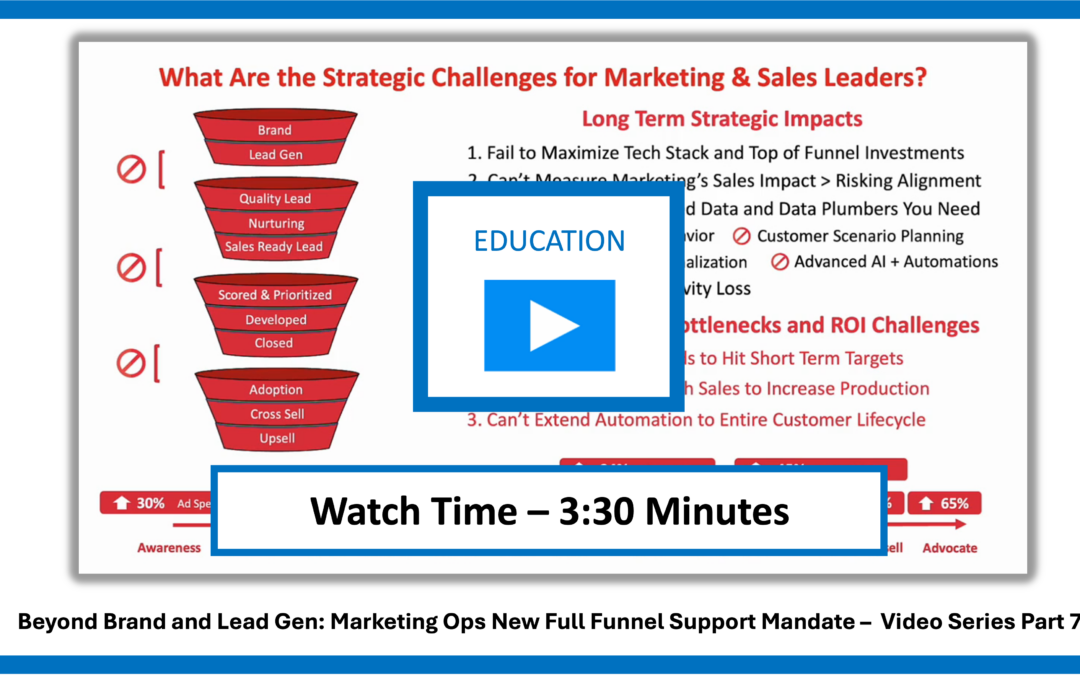
The Strategic Complexities Leaders Create with Under Investment in Marketing Automation Support (Educational Video)
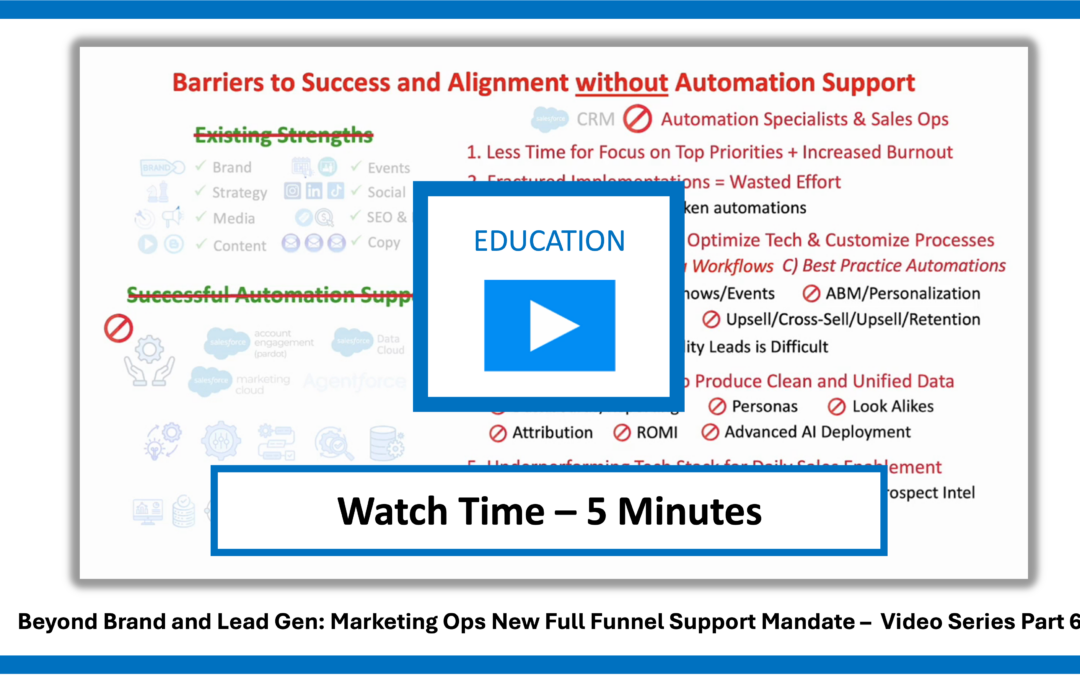
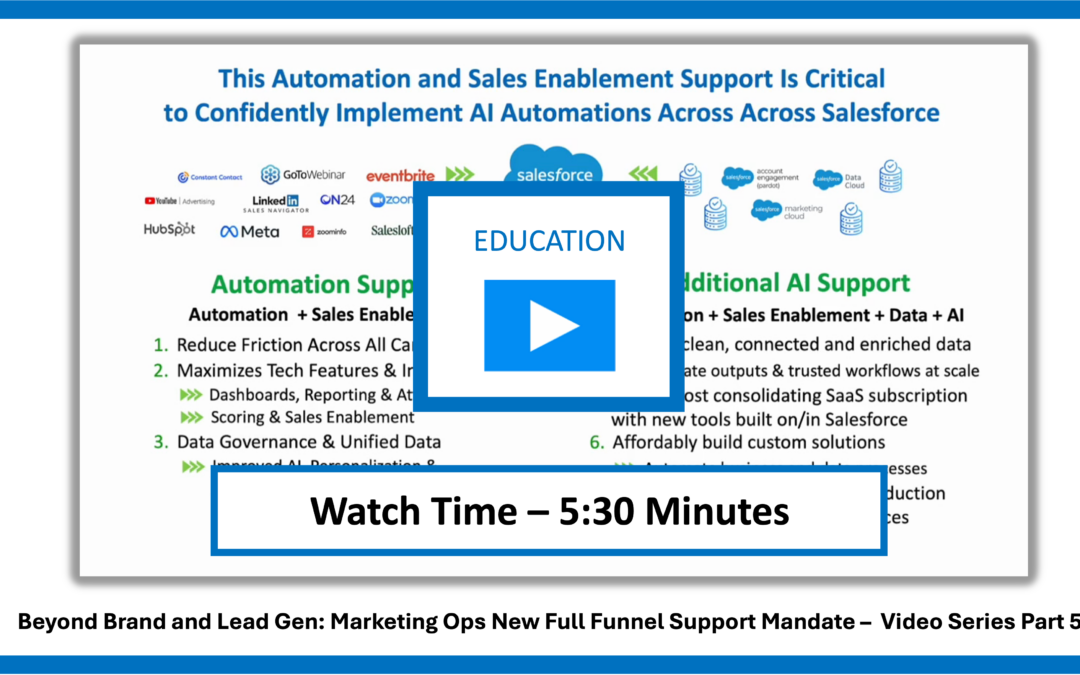
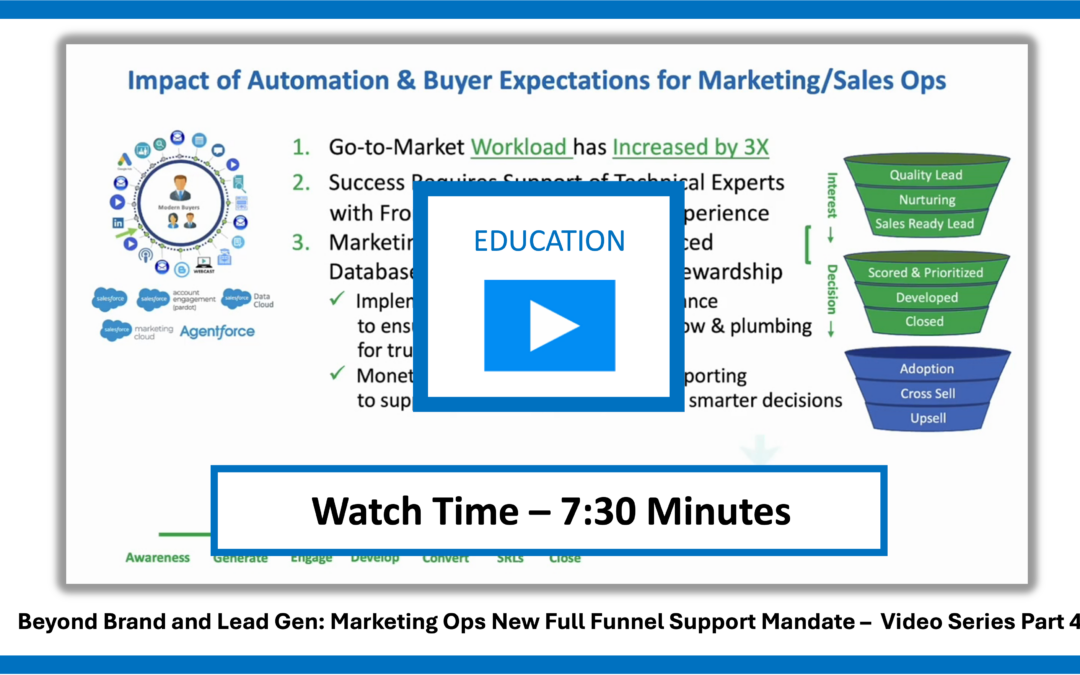
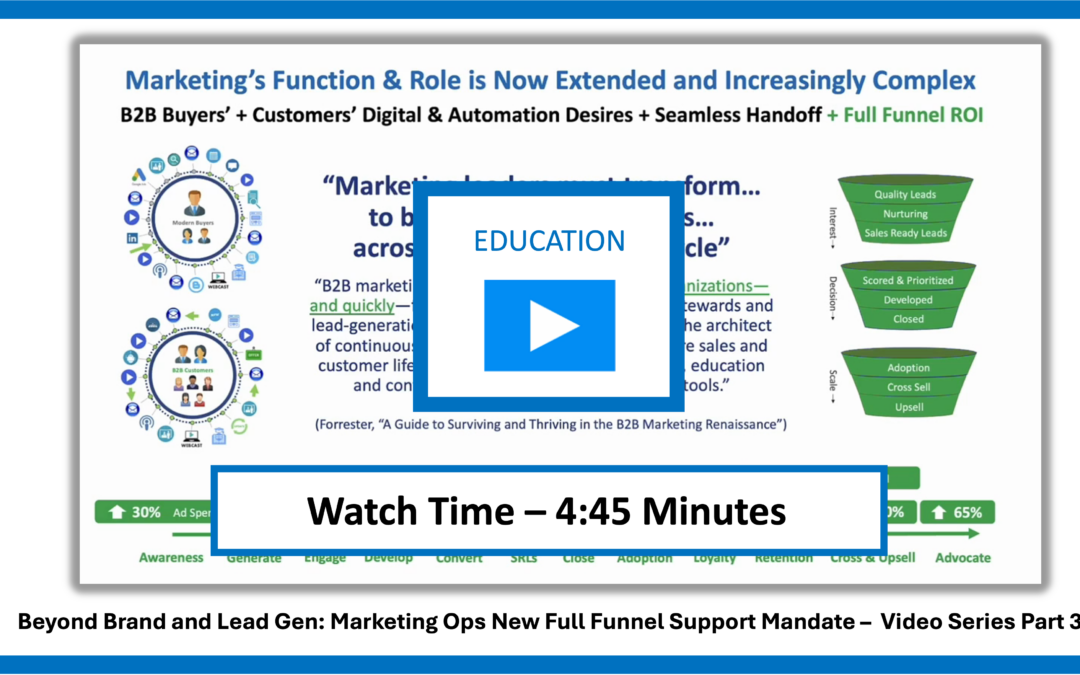
What are the strategic complexities leaders create with under investment in marketing automation support, sales enablement, data, and AI support. This 7th in our series video builds on Part 6 in the Full Funnel Mandate Series where we discussed the daily challenges under investment creates for marketers and sales reps.
(Watch Time – 3:30)
Summary
What are the strategic challenges and complexities that marketing and sales leaders create when they under invest in marketing automation, sales enablement, data, and AI support. This video addresses issues around AI implementations, ROI measurement, HR and strategic planning. The video builds on Part 6 in the series where we discussed the daily challenges under investment creates for marketers and sales reps.
Transcript
What Are The Strategic Complications Marketing and Sales Leaders Create When They Under Invest in Marketing Automation, Sales Enablement, Data, and AI Support?
Tactical Barriers That Escalate Into Strategic Challenges
In part 6, we discussed the type of automation, data, and sales enablement support your existing team needs for success, in detail the daily challenges, and tactical barriers you create for them by not staffing and funding the appropriate level of support. And these tactical barriers caused by ignoring or underinvesting in marketing automation also create strategic challenges for sales and marketing leadership, especially if you’re committed to accelerated funnels and the financial rewards possible with mature automation. In the short term, these tactical issues accumulate to create strategic bottlenecks and discrete ROI consequences at specific areas of your funnel, making it difficult to provide sales with higher quality leads to hit quarterly and annual revenue targets.
Sales Enablement Gaps Undermine Strategic Alignment and Customer Lifecycle Growth
Lack of sales enablement tools makes it difficult for marketing to work towards the strategic alignment required to support accelerated sales funnels that increase productivity, and marketing struggles to adapt and extend campaigns to support the entire customer life cycle, missing out on all the potential incremental sales, cost efficiencies, and overall account gains possible.
Fragmented Technology and Process Silos Limit Tech Stack ROI
So both in the short term and long term, you have fragmented technology and process silos, which makes it impossible to maximize your tech stack investments in addition to impacting your brand, media, and top of funnel spends.
The AI and Automation Acceleration Is Only Just Beginning
And as both Mark Cuban and Gartner have recently pointed out, although things are already moving fast, we are only in the 1st innings of the preseason leveraging the future of automation and AI. And CMOs and sales leaders are about to quickly experience an acceleration of additional strategic issues. First, CMOs will continue to struggle measuring marketing’s contribution and impact on sales, putting themselves and their team at risk because strategic marketing and sales alignment will remain out of reach. And without establishing and maintaining clean, unified data with the right data plumbers and automation process expertise, it will become increasingly difficult to scale, data driven buyer understanding, customer life cycle and scenario planning, accurate sales and spend forecasts, long term personalization, and AI beyond the most basic and fragmented LLMs, and machine learning that you can trust.
Burnout and Talent Attrition: The Hidden Cost of Underfunded Tech Support
Finally, according to both Harvard Business Review and Marketing Week, burnout will continue to plague marketing teams with daily productivity decreases of as much as 30% and top talent attrition increasing by as much as 2.5x as they move to more mature organizations with better funded tech support, which long term, in some cases, can almost double as CMO’s fully loaded recruiting, staffing, and training headcount costs.