by gabriel_sales | Dec 29, 2011
This blog addresses the common misunderstandings about B to B sales outsourcing, and explains how an outsourcing sales company uses their services to find business solutions and increase sales for their clients.
Because outsourced sales and marketing is an industry still in its infancy, many business owners are wary and apprehensive when approached about sales outsourcing their sales. Choosing whether or not to outsource sales is not an easy decision, and there are multiple risks and concerns to consider, these are often confusing to those without experience in the sales industry.
To clear up at least some of the confusion you may have, here are five of the most common B to B sales outsourcing misconceptions we have seen from business owners here at Gabriel Sales.
- 1. “I don’t need a full-time rep.”
While many clients originally only want to staff a part-time sales representative, we have found this seldom works long term. Even if a company starts out with a part-time person, it often becomes necessary to scale to full-time. Sales outsourcing companies are flexible in this regard, and work with their clients to find the most effective balance possible. Gabriel Sales offers temporary, part-time, and full-time options for lead generation and inside sales.
- 2. “I already have a sales team. I don’t need outsourcing.”
Having an existing sales team does not automatically exclude you from the benefits of sales and marketing outsourcing. In fact, many of our clients have sales teams of their own. We improve upon what you already have, and can act as an extension to your current sales and marketing teams. We often employ a sales representative exclusively for setting sales appointments, sales qualifying or B2B lead generation. Other times, we are taken on solely to aid in a new product launch. There are many sales services an outsourcing sales and marketing company can provide to an existing sales team; to see more of them, check out our services page.
- 3. “I want to do my own recruiting.”
If you’re considering outsourcing your sales and marketing, your current sales recruiting process most likely isn’t working. If you don’t have years of experience finding people who can execute successfully, an outsourcing sales company can definitely help. Many companies end up coming to us because of the lack of success of their own recruits. Recruiting takes time and money; outsourcing sales saves both. By outsourcing sales and marketing, businesses can take advantage of the vast sales expertise experienced sales personnel provide to them.
- 4. “I want to remain in control of my sales process.”
We know choosing to outsource your sales and marketing can seem like handing the keys to your convertible over to a complete stranger. This can no doubt be unnerving. However, we have found open communication between both partners in an outsourcing sales relationship to alleviate this anxiety. At all times and in all situations working with our clients, we keep them informed of our activities and progress. You, the client, finalize any decisions.
- 5. “I want to build my brand, not my outsourcer’s brand.”
When you hire a B to B sales outsourcing company, their job is to sell you, not themselves. Here at Gabriel Sales we understand this, and constantly put the client first. Our sales representatives make calls and act as your employees in all business interactions. Our job is to help you succeed. Only then, do we succeed.
by gabriel_sales | Dec 15, 2011
Gabriel Sales is a top sales and marketing operations outsourcing company with years of experience in cold calling. Here are ten B2B sales strategy tips for effective cold calling:
- Prepare. Understand the overall goal you would like to achieve with the call. Plan it all out and know what actions you need to take to meet your goal. What needs to happen by the time you hang up? Are you looking to set an appointment? What information do you need from them? What do you want them to understand about you? What do you want the results of the call to be?
- Use your manners. Poor phone etiquette is an easy way to lose a deal before it has even started. Show personality in your voice when you speak to avoid boring your prospects to death. Don’t chew anything while you speak, you want to sound professional, energetic and articulate.
- Sell using a script, but don’t sound scripted. If you are fumbling over your opening statement, you can come off unprepared. You only have a few precious seconds at the beginning of a call to “hook” your client’s attention. Show confidence. Give them a reason not to tune you out.
- Don’t create extra objections for yourself. Good planning on your part, creating a solid opening, can head off objections simply by instilling confidence in your prospect. Make sure everything you say after is as equally planned out. Don’t say anything that does not direct apply to solving your prospect’s problems.
- Ask questions that sales qualify. Have the questions you need answered to sales qualify a prospect prepared ahead of time, and have them in front of you to reference. This is extremely important; in most cases, you need to learn as much about your prospect as they do about you. Good questions lead to better information and more appointments. Order your questions in sequence of priority, and ask them in that order.
- Listen to their answers. This may seem obvious, but listening is key when making a good sales call. By asking the right sales qualifying questions, you can be sure you will get the right answers, if you simply open your ears. Listen attentively to their needs, do not interrupt and wait for them to say everything they want to.
- Do not mistake negative answers for rejections. The two are not synonymous. While an unfavorable response (such as a prospect claiming to be too busy) may be a sign they are not interested, it should not be assumed this is always the case.
- Do not push unnecessary content. Many times, a request for additional information is simply a guise to get off the phone. Don’t let this happen to you! If your prospect asks for more information, make sure you know why. Ask them what kind of information they want; this will increase the odds of them actually reading it.
- Get what you want. Show no fear, be confident and ask for it! Whatever the goal of your call is, the only way you’re going to achieve it is to ask. Just like with your opening, you should have a planned out way of asking for what you want. If your goal is an appointment, set the date and time immediately.
- Show your value. Talking about how great you are rarely impresses anyone. If you want to keep your prospect engaged, you always have to remember the client’s perspective. The best way to show your value is to ask smart sales questions, and then listen to the response and follow up with another great sales question.
For more information on cold calling or B2B sales strategy, please feel free to contact us.
by gabriel_sales | Dec 8, 2011
This blog outlines the role of white papers in today’s B2B sales content strategy and how to craft a white paper so that it best serves both you and your customer.
Today’s digitized customer often researches potential purchases using the relevant media content provided to them. One way to provide educational content to your customer is to use a white paper. White papers, in the business sector, are used to persuade the reader that a service, product, technology, method, etc. is superior to others, and that it will fill the client’s needs. Its goal should be to influence the decision making process of current and potential customers.
A good white paper is aware of its clients’ specific problems and addresses this early in the paper. Instead of simply explaining what your service or product is, phrase the information as solutions to needs you already know your client has.
For example, instead of:
“Gabriel Sales provides full-time sales and marketing operations.”
Write:
“Gabriel Sales’ full-time sales and marketing operations helps to identify winning strategies for your specific goals and objectives, navigate the new intricacies of today’s complex sales process and close deals.”
Time has become one of the most valuable resources in today’s digital environment of instant satisfaction. Potential customers do not spend as much time with your content as they used to and need to be entertained as well as educated. If your white paper is too text heavy, it is unlikely to be read in its’ entirety. It will also probably bore your reader into clicking on something more interesting.
Having clear summaries at the beginning and end of your white paper, as well as throughout, helps keep your reader focused on the messages you are trying to deliver. It also helps to ensure that if your reader does not have time to read your entire white paper, they are still spending some time with your overall message.
Also, the use of graphics, such as charts, graphs, or fact boxes, helps retain the reader’s attention. These graphics can also be used to summarize the key messages you want your reader to take away from the white paper.
To learn more about white papers and how to incorporate them into your B2B sales content strategy, please contact us. For more information on how White Papers can be included in an overall digital content strategy learn a little bit more about a holistic approach by checking out “What is better sales collateral?”
by gabriel_sales | Dec 1, 2011
This blog outlines how a business case study can be leveraged as a marketing tool, and the ways doing so can benefit your company.
While a case study’s primary function is to educate its reader on a particular subject, the power of using a case study as a piece of B to B sales content should not be overlooked.
In recent years, many companies have started using case studies as a means of educating potential customers on the type of work they do. As an outsourced sales and marketing company, we find this helps the company both build credibility and work more time efficiently during the sales process.
Case studies can be used to build credibility by reassuring the potential customers of the company’s past successes. A case study provides a company with the opportunity to provide a narrative of their process to show the tangible value and explicit results of the work they do.
A good case study starts by outlining the starting point. Here, the company has the chance to detail the problems they are equipped at solving and explain how their solutions fit the customer’s specific needs. Expose a business pain your customer has, and that you know how to fix it. In essence, you put your potential buyer into the shoes of a decision maker who has already been in their position.
The “Results” section of a case study then shows readers why your company’s solution to its client’s problems were the best, by providing evidence of the success of your business relationship. Results should be expressed in specific, quantifiable terms to exhibit that your company not only has a process for solving problems, but that it can execute as well. Results should also reveal the broader business problem your company solves (i.e. closing more deals, increasing profit, etc.).
During the sales process, companies can direct decision makers to their case studies to help persuade him/her to reach a decision. This helps the company work more time effectively by eliminating the need for people to give out this information over the phone.
Overall, a case study should tell your business story. Unlike white papers, which are more detailed and generalized, case studies provide personal narratives of specific situations, and give a chance to show that your company’s work has real value.
For more information on B to B sales content or how to write business case studies, please contact Gabriel Sales.
by gabriel_sales | Nov 18, 2011
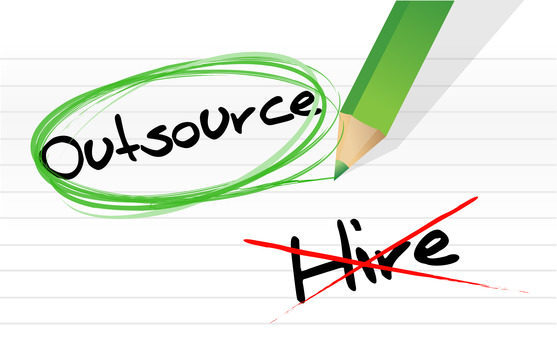
Choosing to Outsource instead of hiring illustration design
This blog explains how you can use an outsourcing sales and marketing company to quickly increase sales, in order to secure investments for a new product or technology.
When trying to convince someone to invest in a new product or technology, businesses will likely be asked to show why the investment is worth the money. Investors are looking for sales metrics, often by specific target markets and sales verticals. In other words, an investor wants proof that you can deliver, so they can feel secure in investing. However, if your recent sales do not impress, you are unlikely to establish trust and secure investments.
So, what can you do when you have a great idea, and not enough sales traction to get solid investment terms? One solution to this problem is to turn your sales over to an outsourced sales team to quickly increase revenue and implement the use of sales and marketing tracking tools, and performance metrics that report and measure dollars in and dollars out.
Without extensive sales knowledge and sales experience, these tasks may seem daunting. An outsourcing sales company can help make this process much easier and less painful. An outsourced sales team can help you attract the capital you need and quickly get your product or service to market.
Benefits of Sales Outsourcing:
- Experienced sales professionals work to understand your specific business pains and needs
- Outsourced sales teams use their experience to quickly devise and execute business plans
- Outsourced sales teams understand what strategies and sales methods will work best for your business
- Experienced sales professionals work directly towards achieving your goals efficiently and effectively
- You can target your most successful markets, while simultaneously building new markets and securing new leads
When your sales process is running smoothly and effectively, turning out consistently closed deals at the end of your pipe, you should have no problem obtaining investments for a new product or service. The team at Gabriel Sales can help make that happen.
If you’d like to see how sales outsourcing could benefit your company, contact us for a free pipeline velocity review.