
The Evolution of Proven Outsourced Sales and Marketing
New Outsourced Sales and Marketing Solution for a New Sales Environment
We have been helping companies build modern sales and marketing operations to cost-effectively scale revenue with comprehensive outsourced sales and marketing solutions since 1999.
We believe that the business-to-business market is in the middle of a massive disruption, that most solutions are first “bought” by making it easy for the buyer to self-educate, and then “sold” by customer service oriented reps. This requires telling your story in an honest and authentic way through the seamless integration of content marketing, marketing automation systems, a buyer education content management system, and sales reps that know how to use these tools as part of their calling efforts.
A Quick Early History
Gabriel Sales, an outsourced sales and marketing company, was founded in 1999 in Silicon Valley to help accelerate sales for aggressive, high-growth companies. Since that time, we have executed thousands of campaigns for hundreds of products and services, successfully launching B2B solution sales efforts for multiple startups, SMBs and divisions of Fortune 500 companies. We have helped generate over $270M in equity exits for the executives and founders we work with, and driven over $140M in Annual Reoccurring Revenue.
In 2003, we developed Gabriel System™, a proprietary sales and demand generation acceleration framework. Gabriel System™ is a data driven go-to-market process designed to support the quick deployment of inside sales and lead generation teams in order to drive repeatable, scalable and predictive sales execution.
Our team has developed deep domain expertise and a proven track record selling technology, software, SaaS, cloud applications, professional services, BPO, data analytics and media. Our approach is designed to help founders, executives, and heads of sales and marketing of a company or division between $1M to $20M in revenue, that are ready for growth.
The World Changed – More Recent Developments
From 2001 to 2010, our clients’ success was driven by outsource sales cold callers, email blasting and well-trained solution sales reps developing leads, making presentations and closing business. In 2009, we witnessed the start of a dramatic shift in buyers’ behavior. Buyers became less receptive to cold calls and more resistant to meeting with “sales reps” early in the sales process. Instead, buyers leveraged content for early-stage discovery and education and increasingly pressed to meet directly with product engineers and subject matter experts once they felt educated. Over the past several years, buyers have become even more self-directed and more engaged with digital content, using it to shortlist the companies they want to engage with deeper sales conversations. We call this the shift to “Bought” then “Sold.”
Our data showed that the traditional sales tactics we relied on for years (cold calling, PPC and email) were no longer as effective in isolation without the support of solid sales content that tells the right story to the right buyer at the right time in the right way.
In early 2009, we expanded Gabriel System™ beyond outsource sales to include digital content marketing, marketing automation and social media outreach. By the middle of 2014, we had over 20 successful client launches with this new, integrated B2B sales engine. With this solution, our clients saw an increase in rep productivity of 2X, a reduction in sales cycles, a long-term reduction in COS% and an increase in per deal margins because well-educated buyers stopped asking for as many discounts.
What Our Data Now Shows
- Solutions are first “bought,” then “sold.” More and more products and services are first “bought”— with digital content that proves you understand your buyers’ needs and pains—then “sold” by closers, once buyers feel educated enough to engage in deeper discussions.
- Being buyer-centric is no longer optional; it is a requirement. Buyers care more about what your product can do to solve their problem, and less about generic features and benefits. Successful sales reps facilitate transactions because they know when to hard close and where to apply pressure.
- Your Sales Story is Critical. You need to understand and map your buyer’s needs and buying process and be prepared to tell your story the right way to the right buyer at the right time clearly and concisely. You need to arm your reps with the content and tools to tell that story.
- You can no longer simply spend your way to more sales. Buying more leads and hiring more reps does not always translate directly into more opportunities and more closed business. Building a repeatable sales and marketing process first produces more revenue, faster, at a lower cost.
- Marketing Automation is a game changer. Cold calling still works, but not in isolation. It produces exponential results at a better COS% when combined with a marketing automation technology stack that scores leads and predicts what buyers are most likely to buy. Cold calling without automation burns cash.
- Sales content marketing doesn’t need to be expensive or over-designed. Buyers care more about authenticity and substance and less about creativity and flashiness. Successful sales marketing simply requires digitally cloning your thought leaders in multiple ways across multiple formats.
- Solution Sales is now 80% science and 20% art. Data needs to drive strategy, and you cannot collect the data you need without the right sales and marketing technology stack.
- Building your pipeline first makes it easier to recruit better sales talent. It is much easier to attract and retain closers with a sales pipeline of qualified and scored opportunities.
- A predictable pipeline reduces risk. Senior sales talent can be your greatest sales expense, and over 60% of new sales hires never produce enough closed deals for a positive ROI. An existing pipeline makes it easier and faster for you to evaluate a new hire’s sales contribution with a much shorter leash.
A New Outsourced Sales and Marketing Solution for a New Sales Environment
We offer outsource sales and marketing and consulting that helps companies drive real change in their sales and marketing organization. We are driven by sales targets and this also includes our marketers that have sales DNA. We help you build a repeatable sales process by combining content marketing and marketing automation with outbound and inbound campaigns and trained sales reps and marketers to build, run and manage scalable sales engines. Our top priority is to put real opportunities in your closers pipe and accelerate your sales efforts.
As consultants, we can help you drive real and meaningful change to accelerate sales. As we craft compelling sales stories, we create a scripted, repeatable sales and marketing process/strategy that is scalable to grow your infrastructure.
Once your strategy is ready to open new markets or launch new solutions, we can:
- Run B2B Campaigns
- Manage your Content Production and Distribution
- Staff and Manage a Marketing Team
- Staff and Manage Telemarketers and Inside Reps
- Close Business
We love taking disruptive products and solutions to market. We continue to be selective in our partnerships, ensuring that each client gets a dynamic, measurable plan to meet sales and growth projections.
We typically work with companies as they scale through several stages of maturity. As you grow, we have a network of collaborative partners to assist with:
- Product Marketing – Packaging, pricing, positioning and new product development
- Highly Technical Content
- Sales Recruiters
- Solution Sales Trainers and Architects

Glen Springer
Founder & Chief Strategist

Carol Springer
Founder & Sales Operations

Janet Johnson
Operations & Finance Manager
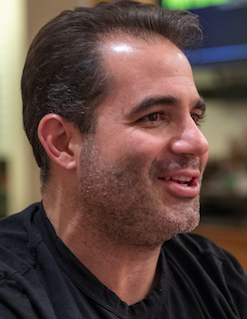
Alex Barberis
Marketing Production Manager